



“A critical, independent and investigative press is the lifeblood of any democracy. It is only such a free press that can temper the appetite of any government to amass power at the expense of the citizen.”
-- Nelson Mandela
In August of 2013, Jeff Bezos, founder of Amazon, bought the Washington Post for $250 million dollars. Since that time, the Post has seen its subscriber base decline from approximately 470,000 weekday to less than 100,000, resulting in losses of $177 million over 2023-2024.
As a private company, the next steps were entirely predictable; the paper announced layoffs of approximately 300 employees, or about one-third of the newsroom. The response to the layoffs was equally predictable. Journalists responded with the sense of entitlement and self-importance that we’ve all grown used to:
Emmanuel Felton (Race and Ethnicity Reporter): “This wasn’t a financial decision, it was an ideological one.”
Note: Felton’s X bio states that he is the post’s “first and last race and ethnicity reporter.” No doubt the world will suffer from this loss.
Sam Fortier (Sports Feature Writer): “I am part of the mass layoffs at the Washington Post. I am sad and angry. We all want to keep doing the work. But for now, I want to document a reality of being in journalism today.”

Note: Not to be mean, journalism? You’re in the sports department. I can get real-time sports online for free. Or – stay with me – from Substack.
Note 2: There should be a comma after “now.” It wasn’t just “reporters” who complained:
Washington Post Guild Statement: “Management has framed these decisions as unavoidable, but they are the result of choices. Choosing to cut staff instead of recommitting to the people who produce The Post’s journalism is a failure of leadership and vision.”
Marty Baron (Former Executive Editor): “This ranks among the darkest days in the history of one of the world’s greatest news organizations.”
Critics pointed out that, given Bezos’s net worth of approximately $250 billion, he could have easily covered the losses if he chose to.
Critics also reported that “at least 14 climate journalists” were among the cuts, leaving only “five writers/reporters left on its climate desk.” This raises important questions:
There were 19 climate journalists!?!
There are still 5 climate journalists!?!
How many climate journalists does it take to look out a window?
Karma is a bitch!
Getting laid off sucks. I know. It happened to me. Of course, that was before social media, so I couldn’t go online and complain that the company laid me off because “we can’t afford to pay you to sit around and do nothing.”
Note: that is a direct quote. In my defense, I had little to do because I’d spent the last 6 months fixing all their IT problems caused by not having had an IT person. Still, it was their money and their call. I got another job. They went out of business. Karma is a bitch.
If you’re an ex-Post reporter who’s just been laid off, complain away; unlike you, I believe you have a right to free speech. However, understand why it happened.
The landscape is changing. This isn’t 1950. Or ’60. Or even 2000. It’s 2026, and the number of people waiting by their door for the Post to report on news that happened 3 days ago is dwindling.
Adapt or die!
Of course, the Post’s problems are broader than this. The Post’s biggest problem is that it was force-feeding its readers, preaching rather than reporting: A sample of recent headlines from “one of the world’s greatest news organizations” is revealing:
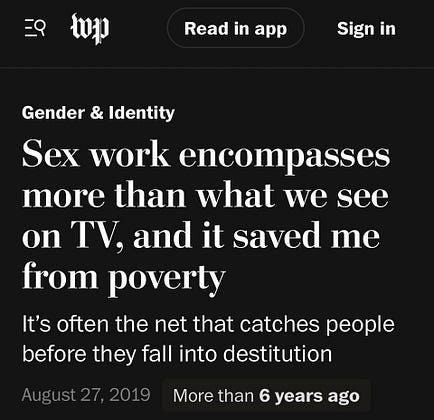
“Do transgender athletes have an edge? I sure don’t.” (April 1, 2015)
“I’m a black climate expert. Racism derails our efforts to save the planet.” (2020)
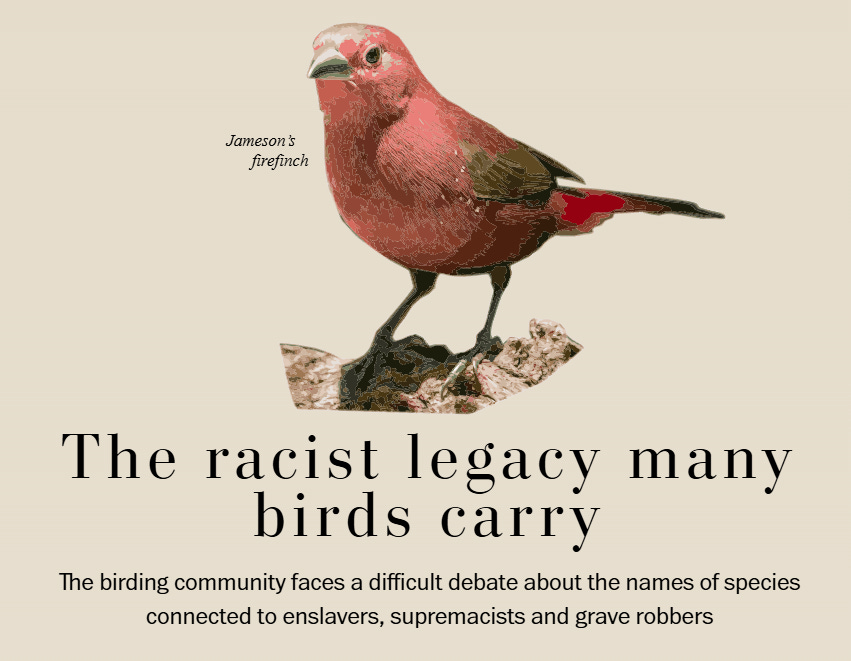
“COP26 panel discusses how girls are disproportionately affected by climate change” (November 2021)
Pregnant people at much higher risk of breakthrough COVID, study shows” (March 2022)
“Can the women’s movement be as effective without the word ‘women’?” (May 5, 2022)
From Umoja, Kenya, to India, climate change has led to domestic violence” (January 3, 2023)
In case you think a lot has changed since 2023, here are some cutting-edge articles from this month:
“Climate change is making the Winter Olympics harder to host” (February 2026)
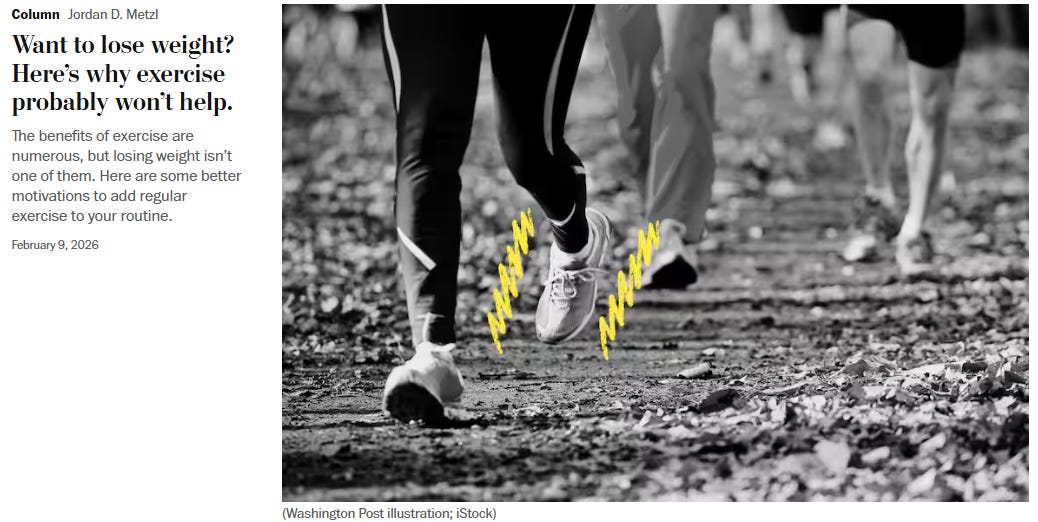

You suck! Pay me!
Highlighting the absurdity of many of the stories that the Post has published over the years does not mean that it doesn’t do important work. It does, however, show that cutting some jobs won’t kill the paper.
Nor will it necessarily result in “democracy dying in the dark.” I’m pretty sure democracy can survive the loss of this:
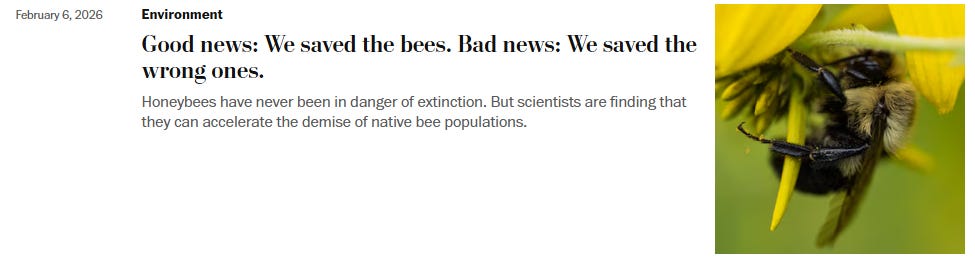
I’m also confident that the paper will find a way to make do with “only” five climate reporters. Honestly, given the headlines, I could probably run the department from my office working part-time. Here’s my first headline:
“Are polar bears thriving despite climate change because of their problematic ‘whiteness?’”
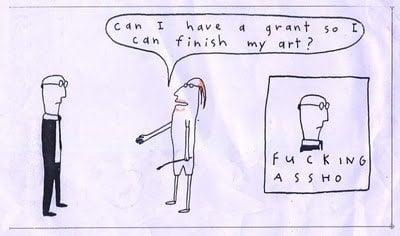
The criticism directed at Bezos is equally absurd. While it is true that Bezos could easily absorb the losses of the Post, why would he, given that many of these “journalists” hate him. Asking him to save their jobs recalls this comic:
“Democracy dies in darkness” is meant to remind us of the importance of government transparency and the press’s role in ensuring it.
However, when the press fails to do its job, it doesn’t shine a light on events so much as parrot the government’s desired narrative and distract with irrelevancies. This is what we’ve experienced over the last decade: the media serving the government rather than the people.
If the press won’t shine a light on the government, then we need others to shine a light on the press. Organizations like AllSides, Ad Fontes Media, and Media Bias/Fact Check (MBFC) have made progress in this space.
However, sometimes shining a light is not enough. Cockroaches scatter in the light, but they always find a place to hide. Sometimes the only solution is to fumigate. That’s what Bezos just did, and he shouldn’t be criticized for it; he should be praised.
Phil is a freelance writer, Canadian Navy veteran, and classical liberal. He has lived and worked in both Canada and the United States and currently resides in Vancouver, British Columbia, where he writes on politics, individual rights, free speech, and anything else that catches his fancy.
As you may have picked up from this article he’s now trying his hand at humor. You can find some of what he finds funny here.
If you enjoyed this article, please consider sharing your thoughts in the comments, subscribing, or even buying him a coffee if you’re feeling generous and felt that this was a particularly enjoyable article. Your attention, participation, and support really make a difference to us.
Also, a ‘like’ really helps the Substack algorithm find us. And we’d be most grateful if you would share this piece to help the Substack grow.
Wrong Speak is a free-expression platform that allows varying viewpoints. All views expressed in this article are the author’s own.

How many climate journalists does it take to change an LED light bulb to prevent darkness that kills democracy?
All my local newspaper reports on is town council meetings where they talk about snow plows breaking down and water meter repairs. I'd kill for some articles about racist birds!