


I’m starting to think that I’m living in Groundhog Day.
I could have sworn I’d written about Canada’s “desire” for high-speed rail some time ago, but I can’t find it. Well, the project is back in the news so that’s what I’m going to write about. Possibly again.
If you’ve been following me for a while, you should already know two things about me: 1) I hate Justin Trudeau, and 2) I am not loyal to any party. Knowing these two things should make the following statement less shocking:
I’m on the fence with respect to Prime Minister Carney. On one hand, he’s intelligent, accomplished, and says a lot of things that sound good.

On the other hand, while Trudeau is gone, most of the occupants of the clown car that is the Liberal party are still there. Oh, and Carney is a politician, so everything he’s promising could be just another lie or an effort to fill the pockets of politicians, bureaucrats, and their friends and families.

Still, I’m on the fence because if my standard was an honest politician, I’d never vote; I’d just sit in my office all day and mumble to myself. And I already do too much of that.
That said, there are limits to how much lying and corruption I’m willing to ignore. Waste and incompetence bug me a little too.
So, when the government proposed to build a high-speed rail (HSR) system from Quebec City to Toronto, passing through major cities including Laval, Montreal, Ottawa, and Peterborough, it got my spidey senses tingling.
As with any project, there are many pros and cons.
Let’s start with the pros:
There are a lot of Canadians in that area.
That’s it.
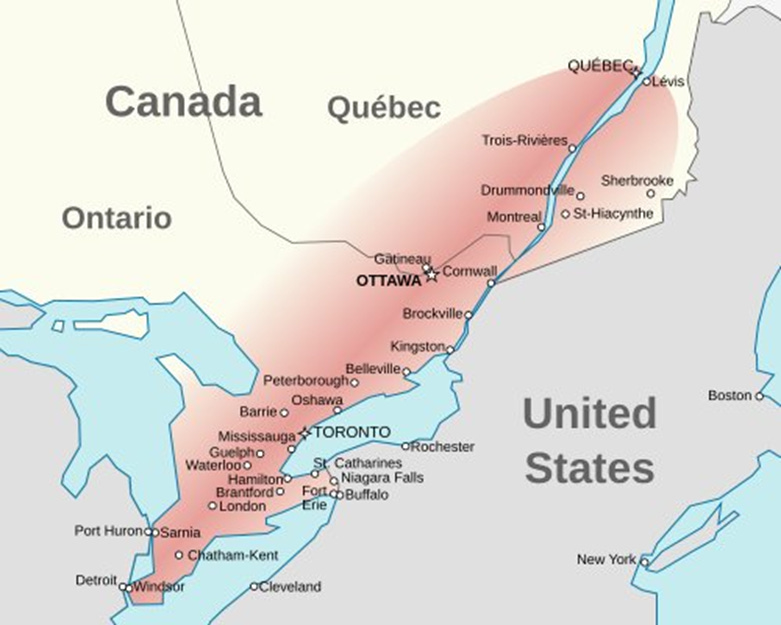
There are also many roads and highways that could be expanded instead of building an HSR system. However, I don’t think building one in this area is a terrible idea. It would be much faster than driving, accessible to people without cars, and create jobs (allegedly).
There’s one big problem with the idea, though, its government funded, and they want $90 billion dollars.
“A billion here, a billion there, and pretty soon you’re talking about real money.”
- Everett Dirksen
Choo choo enthusiasts make “concrete” arguments like “Canada is the only G7 country without high-speed rail” as if train-envy is justification for spending billions of dollars.
The government, on the other hand, will provide more detailed and rational arguments for proceeding, but they will be based on analysis designed to make the project look good. The process goes something like this:
Government asks a train company to do a cost-benefit analysis.
Company lies to government about costs and timeline.
Government winks at company then lies to the voters.
Several months of propaganda follow.
Government signs deal with train company.
Politicians, bureaucrats, and their friends and family get rich.
Delays
Cost overruns.
Politicians, bureaucrats, and their friends and family get richer.
Delays
Cost overruns.
Politicians, bureaucrats, and their friends and family get richer.
Most of us die before we see anything built.
Sarcasm aside, I come to this healthy level of skepticism by paying attention. Something the government relies on voters not to do.

Pass.
Correction, hard pass.
Here’s what paying attention reveals about Canadian government transportation projects:
Eglinton Crosstown LRT – NDP MPP Joel Harden called it a “three-year late, billion-dollar, over-budget boondoggle.” When the NDP thinks something is a waste of taxpayer money, you know it’s a problem.
Ottawa’s light-rail transit system – The project’s capital budget has risen from $4.66 billion to $4.91B as construction is behind schedule. The full extent of the fiasco is outlined here (well, at least through January 2022), but let’s just say there’s a history of delays, cost overruns, sinkholes, lawsuits, and malfunctions. It appears that those running the project also failed to take into account that it snows in winter. Sigh.
In case you think it’s strictly an issue with the incompetence of Canadian governments or transportation projects:
The government Phoenix project, aimed at modernizing the federal government’s payroll system, was estimated to cost $310 million. It is now estimated to have cost $5 billion. Oopsie!
In the UK, the HS2 High-Speed Rail Project, initially estimated to cost £32 billion, is now expected to cost £100 billion due to major delays, management inefficiencies, and budget mismanagement.
And lest we leave out the US, the California High-Speed Rail project, also known as the “bullet train,” was initially approved by voters in 2008. The goal was to connect Los Angeles to San Francisco. The original budget for the entire system was estimated at around $40 billion, and the initial completion date was targeted for 2020. The project has faced numerous delays and cost overruns, and the most recent cost estimate for Phase 1 (just phase 1!!!) has ballooned to $126 billion. This is more than triple the original budget. The initial operating segment, a 171-mile section from Merced to Bakersfield, is now expected to be completed mid- to late-2030s, possibly ~2040.
The California project is perhaps the most relevant to this discussion, as California and Canada have similar populations (around 40 million people) although California’s GDP is higher ($4.048 trillion USD vs. $2.2 trillion – thank you, Justin Trudeau!). Why anyone would believe that it will cost Californian taxpayers $126 billion USD to link two cities 171 miles apart, but the Canadian government can link 6 cities over 500 miles for” just” $90 billion CND ($65.1 billion USD), is beyond me.
My advice to taxpayers? Expect the initial cost, once approved, to be significantly higher. Then double or triple the estimate. Consider yourself lucky if that’s the final cost.
My guess is $1 Trillion before it’s done.
In the immortal words of Happy Gilmore, “the price is wrong, bitch!”
Phil is a freelance writer, Canadian Navy veteran, and classical liberal. He has lived and worked in both Canada and the United States and currently resides in Vancouver, British Columbia where he writes on politics, individual rights, free speech, and anything else that catches his fancy.
As you may have picked up from this article, he’s now trying his hand at humor. You can find some of what he finds funny here.
If you enjoyed this article, please consider sharing your thoughts in the comments, subscribing, or even buying him a coffee if you’re feeling generous and felt that this was a particularly enjoyable article.
Wrong Speak is a free-expression platform that allows varying viewpoints. All views expressed in this article are the author’s own.

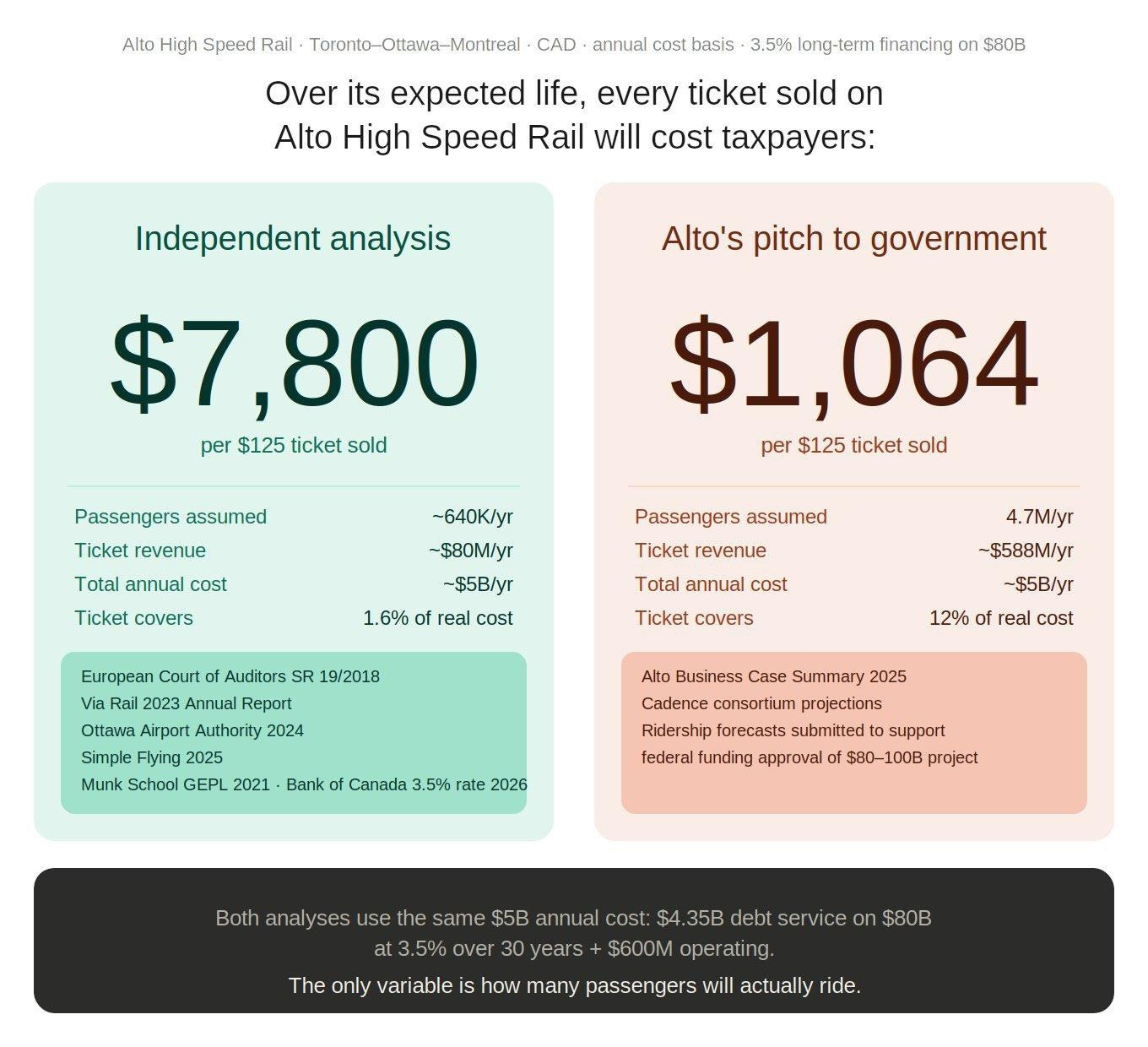
I think to myself as I read phantasmagorical cost and revenue projections:
- Do companies really think the public is that stupid
- Are politicians so desparate to spend my money that they ignore reality
In end I conclude, unfortunately, that both are true.
My, my. The cynic in you really comes out in this piece. Not to say you are in any way incorrect or exaggerating. What puzzles me here is that the voters keep falling for the sales pitch. We (FYI: I voted no for said Bullet Train) are really slow to learn.