


The Olympics are over, and I’m sad for a few reasons, none of which are related to ice dancing.
“The race is not always to the swift, nor the battle to the strong, but that’s the way to bet.”
- Damon Ruynon
Unless it’s ice dancing, in which case, I don’t know, bet on whoever has the most glitter or successfully bribed the French judge.
- Me
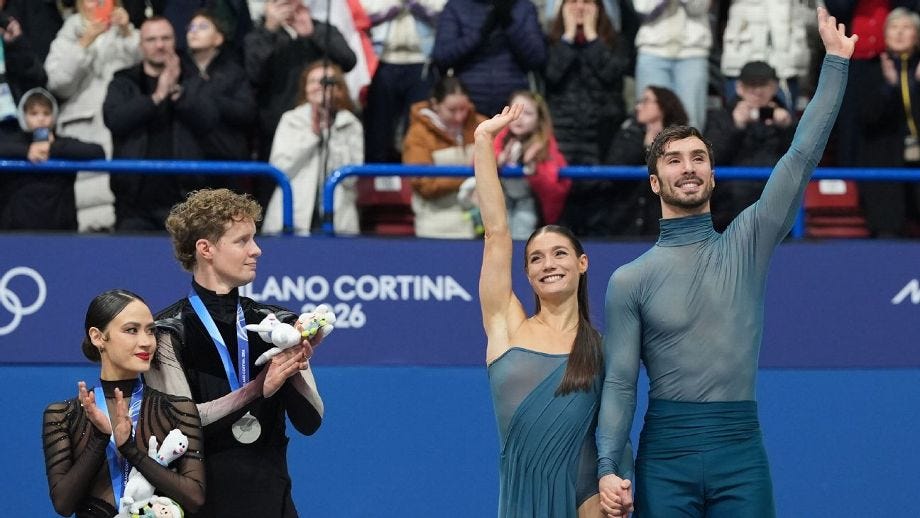
Mainly, I wanted Canada to win hockey gold, and they didn’t, and that’s the way it goes sometimes.
I returned, and saw under the sun, that the race is not to the swift, nor the battle to the strong, neither yet bread to the wise, nor yet riches to men of understanding, nor yet favour to men of skill; but time and chance happeneth to them all.
- Ecclesiastes 9:11
TLDR: you can’t win them all.
Losing is tough. Losing to people who don’t know how to win graciously is far worse.
In retrospect, I probably should have taken a week off social media as I know most Americans know how to win graciously. Online is another world. That said, I was surprised by reactions from some people I thought had more character.
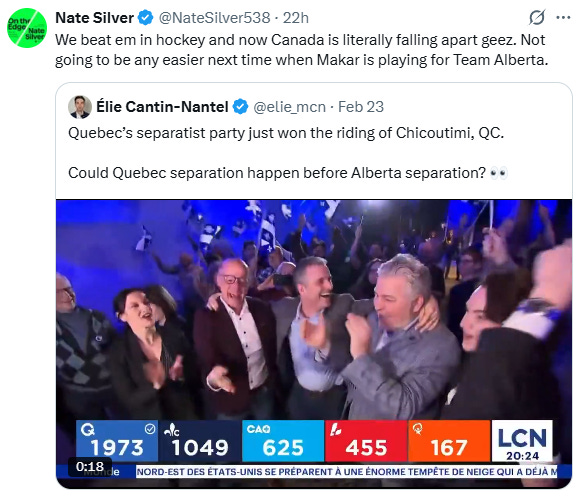
Of course, I fully expected Trump to weigh in. He has some good qualities, but class is not one of them.
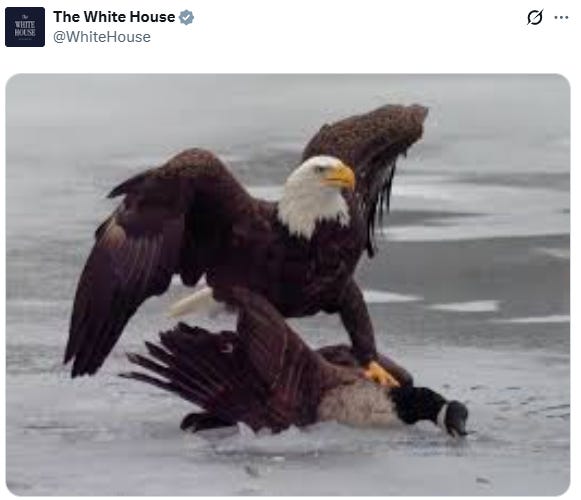
There’s nothing I can do about the game. It’s in the past, and I don’t have a time machine, so I can’t change the outcome.
I do have AI, though, so I beat up George Washington.

And kicked a bald eagle.
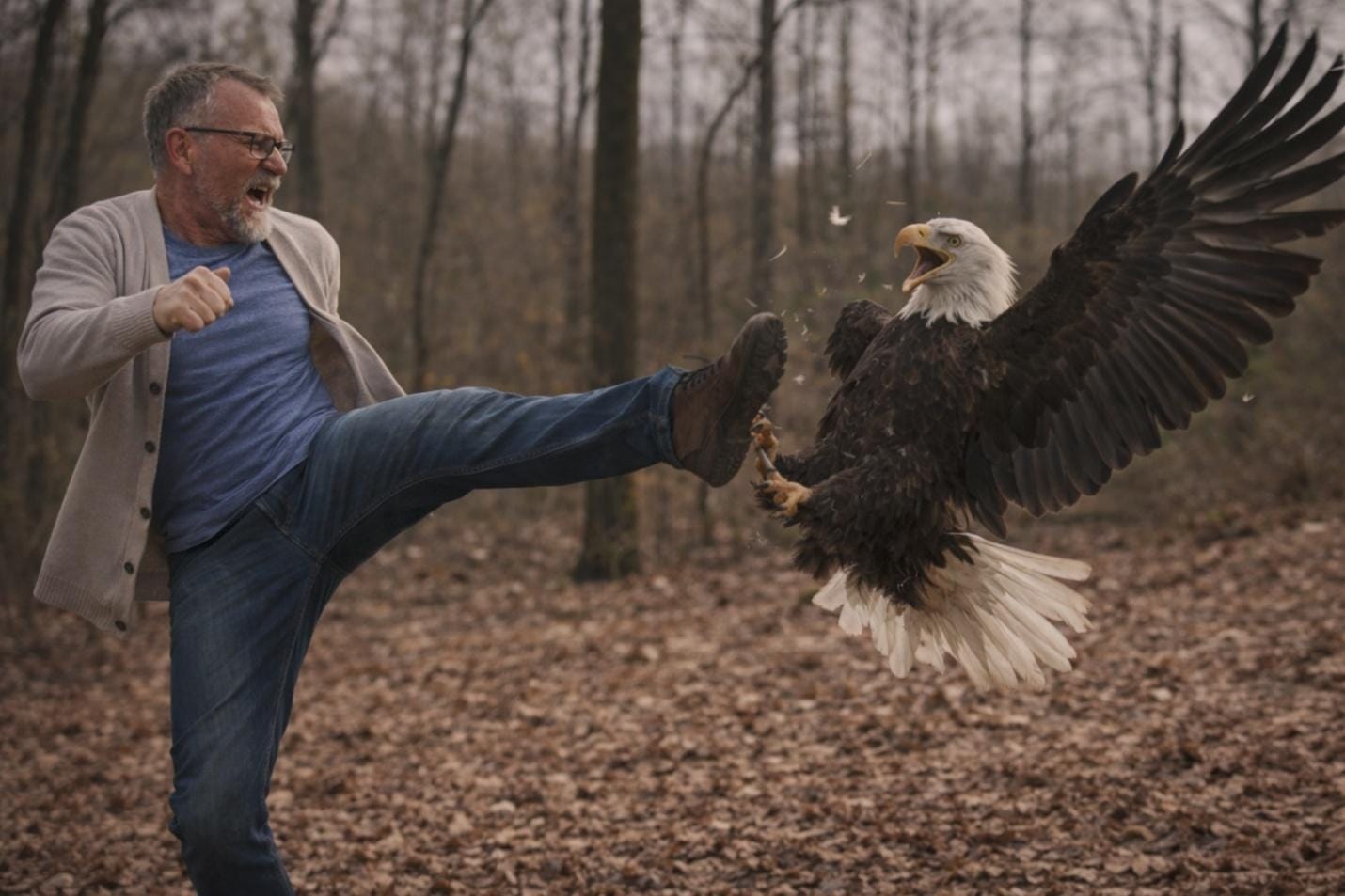
I feel a little better now. The Times They Are A-Changin’.
Believe nothing you hear, and only one half that you see.
- Edgar Allen Poe
That was rather a long intro to get to my point, but here it is: if you follow Poe’s advice today, you’re hopelessly gullible.
The truth is, you probably can’t believe anything you see online anymore. At least not without giving it some thought.
Shortly after Canada came back to beat the Czechs in the semi-final, this image appeared online showing the Czechs had too many men on the ice when they scored their third goal.
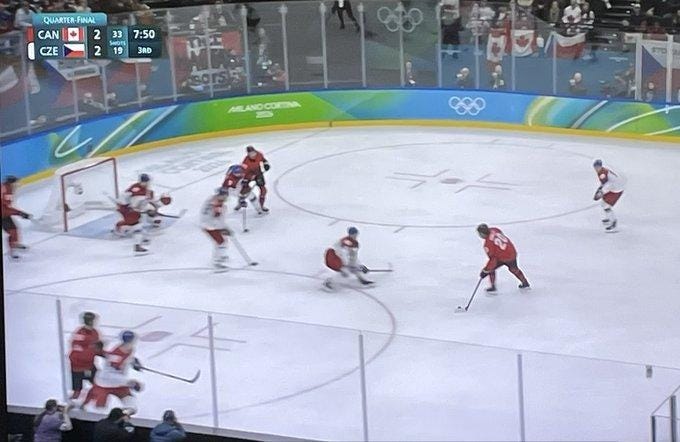
My first thought was, “is it AI? Could the coaches, players, announcers, and refs all have missed this?”
It turned out to be real, but my doubt brought to light an important question: how can we believe anything we see online?
The answer is, we can’t.
Up until about 5 minutes ago, the default response to a pic in the news was to assume it was real. In fact, it would never have crossed anyone’s mind to consider the alternative.
Those days are over.
We are approaching a time when nothing seen online can or should be trusted. The burden of proof will be on the poster.
Ok, some things are obviously fake. Trump did not play on Team USA.
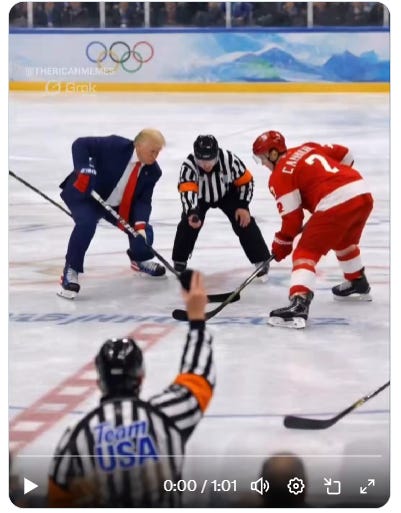
Nor did he participate in ice dancing.

But these are ridiculous images. (Almost) No one would believe either.
The real danger is when deepfake videos show politicians saying things they’ve never said.
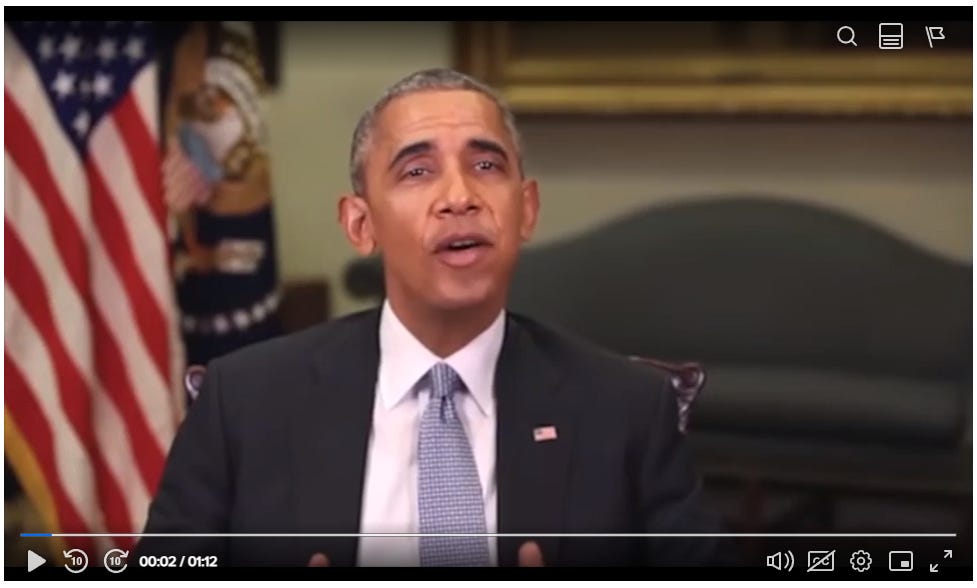
Don’t believe me? Just listen to what President Obama had to say on the topic.
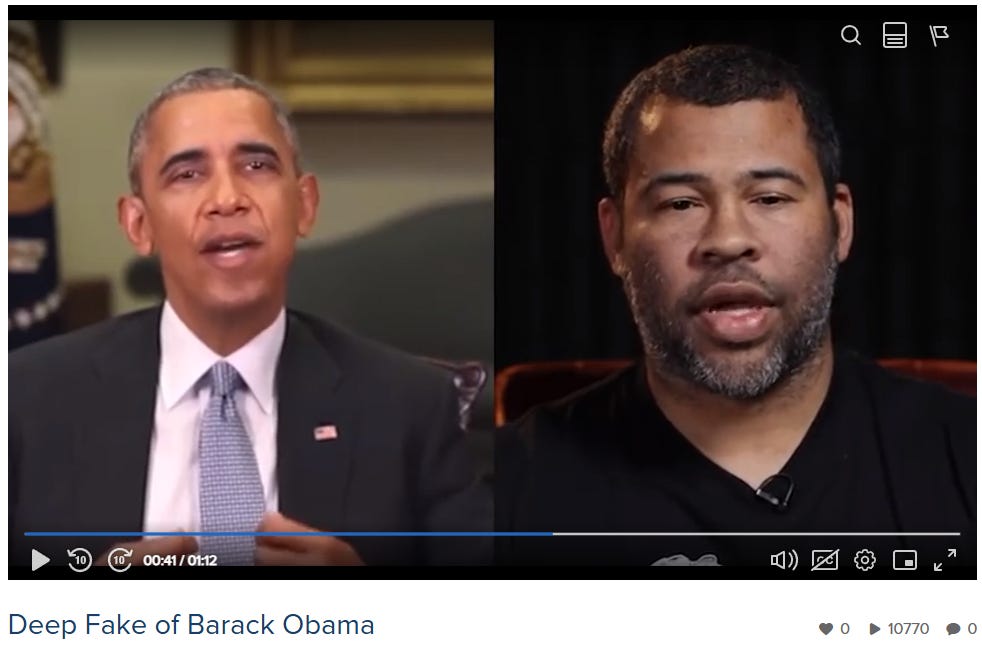
Or an AI video of Jordan Peel pretending to be Obama as was the case.
“Just because you’re paranoid doesn’t mean they aren’t out to get you.”
- Joseph Heller
Getting people to believe what they want to believe is easy. Getting them to pay attention less so. It’s the perfect recipe for government abuse.
Step 1: Identify a problem.
Step 2: “Solve” the problem by taking more power.
Does anyone really believe the government wouldn’t make the following little change?
Step 1: Create the problem.
In this case, the problem is misinformation, and the solution is speech restrictions.
And before you start pointing fingers, this is a bipartisan issue.
The Biden administration worked with social media platforms to curb the spread of COVID-19 “misinformation.”
The Trump administration engaged with social media companies to address what they described as “immigration misinformation.”
As it becomes easier to create believable deep fakes, solutions to address the problem will arise. Organizations will step up to help citizens identify what is real and what isn’t. However, we’re not there yet. Where we are is a place where it is far too easy for people with a little time and less money to pull the wool over the eyes of the unwary.
Am I being paranoid?
Maybe.
However, my philosophy is to distrust the government.
Always.
With that in mind, I think a little paranoia would serve us well.
Phil is a freelance writer, Canadian Navy veteran, and classical liberal. He has lived and worked in both Canada and the United States and currently resides in Vancouver, British Columbia where he writes on politics, individual rights, free speech, and anything else that catches his fancy.
As you may have picked up from this article he’s now trying his hand at humor. You can find some of what he finds funny here.
If you enjoyed this article please consider sharing your thoughts in the comments, subscribing, or even buying him a coffee if you’re feeling generous and felt that this was a particularly enjoyable article. Your attention, participation, and support really make a difference to us.
Wrong Speak is a free-expression platform that allows varying viewpoints. All views expressed in this article are the author’s own.

Michael Crichton, always prescient, saw deep fakes coming way back in 1992 in his novel Rising Sun.
I think there is a space/niche for a site that only role is to confirm and produce facts. No opinions. No “takes”. Just facts.