


There’s an education crisis in America. No, not the one about leftist indoctrination of our youth. Although, yes, that one is bad too. I’m talking about the number of young people who don’t know how to make a sandwich.
Call it “the home economics crisis.”
Although now that I think about it, there’s some overlap between the two problems as the blame for both can be laid at the feet of feminists, school boards, and teachers.
In case you missed it, users on X became embroiled in a battle the other day when Kevin O’Leary stated during his interview on The Diary of a CEO:
“I can’t stand it when I see kids that are making seventy grand a year spending twenty-eight dollars for lunch. I mean, that’s just stupid. It’s just think about that in the context of that being put into an index and making eight to ten percent a year for the next fifty years.”
This was followed by:
“If you have a credit card balance that goes into the next month and you’re spending $5 on a coffee, you’re crazy.”
Yes! How dare he!
Needless to say, X quickly divided into two teams:
Team 1: Brown bagging your lunch is cheaper than eating out.
Team 2: A bunch of morons.
Let’s hear from Team 2 first:

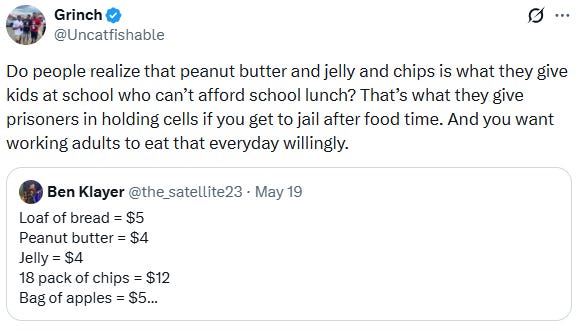
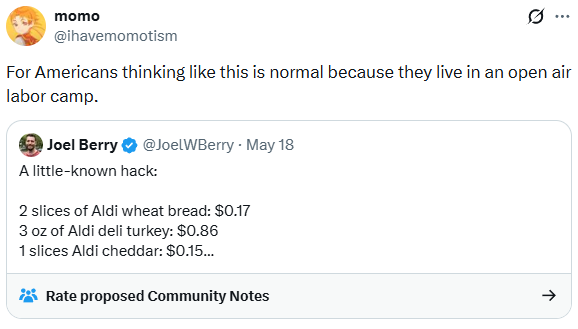
Combining the statements leads to the conclusion that a $28 lunch is essentially the bail the young pay to stay out of jail. Not “big boy” jail, of course, kind of a “go to your room without any supper” jail.
Nobody is arguing that these aren’t tough times, but those are exactly the times you should be trying to cut costs.
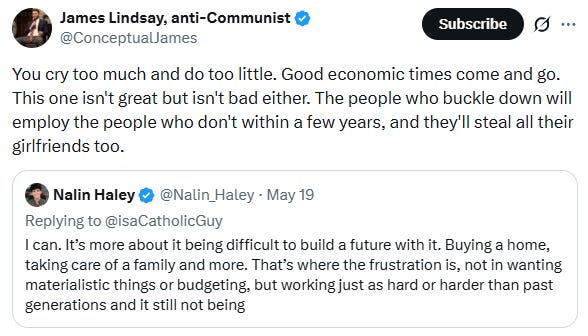
James Lindsay may have said it best:
I also understand that it’s tempting to ignore the advice of a billionaire as hopelessly removed from the struggles of the average person.
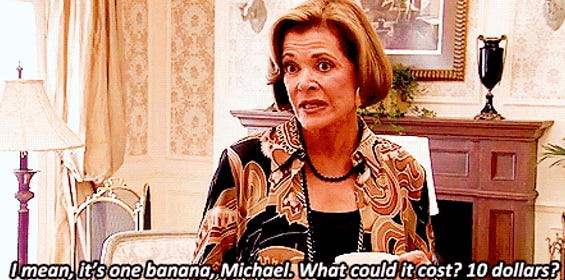
Except for the fact that you need some financial acumen to become a billionaire. Oh ya, and because he’s right. He’s not even asking Gen Z to make sacrifices, just to act like adults. Here’s a breakdown of how each generation spends its food budget:

I don’t know what percentage of their household budgets Gen Z is spending on restaurants and delivery but it’s too much. Honestly, calling it a “budget” is probably a misnomer since if you’re wasting 22% on delivery fees it’s clear that you’re either independently wealthy or don’t have a budget.
And despite what Taylor Lorenz says, it is not an issue of time.
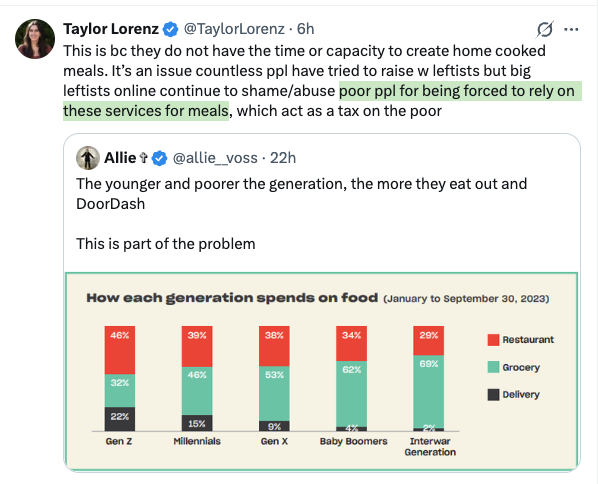
Arguing that people who are predominantly single and childless have less time to shop and make meals than married people with kids is utterly ludicrous.
Where did we go wrong?
There will be an instinct amongst older adults to do what older adults always do and blame the issue on laziness. I’m sure there is something to do with it, but I doubt this generation is any lazier than any other.
There are two problems here:
A lack of meal preparation skills
A lack of budgeting skills
The first problem is easily explained.
Traditional home economics (now often called Family and Consumer Sciences) gradually began to be eliminated from high school curricula in the late 1970s, driven by the women’s liberation movement, rising female workforce participation, and budget pressures that led schools to cut non-core electives.
A growing emphasis on college-prep academics, STEM, and standardized testing (which intensified with the 1980s “excellence” reforms and later No Child Left Behind) squeezed out practical life-skills classes in favor of subjects seen as more rigorous.
True, home economics was overwhelmingly aimed at women, but at least someone knew how to make a sandwich. We can lay this problem at the feet of feminists, school boards, and teachers, but who is to blame for the apparent lack of budgeting skills in the Zoomer population?
I’m afraid that this is the fault of their parents. There has never been a core curriculum class aimed at educating young people on how to manage family finances. When I was younger, it never would have occurred to me to go to restaurants on a regular basis. I didn’t have the money.
However, I didn’t have a budget either; I just knew the value of a dollar and what was wasteful from watching my parents discuss money while growing up. The 70s and early 80s were tough, and I learned by osmosis.

I believe that the problem is that many Zoomers did not experience hard times until they were already adults or near adults, and consequently are incapable of adapting to them.
What are “hard times?” There are many ways to define it, but if you’re a pre-teen or teenager, you would likely define it as how much money your family is spending on non-essentials.
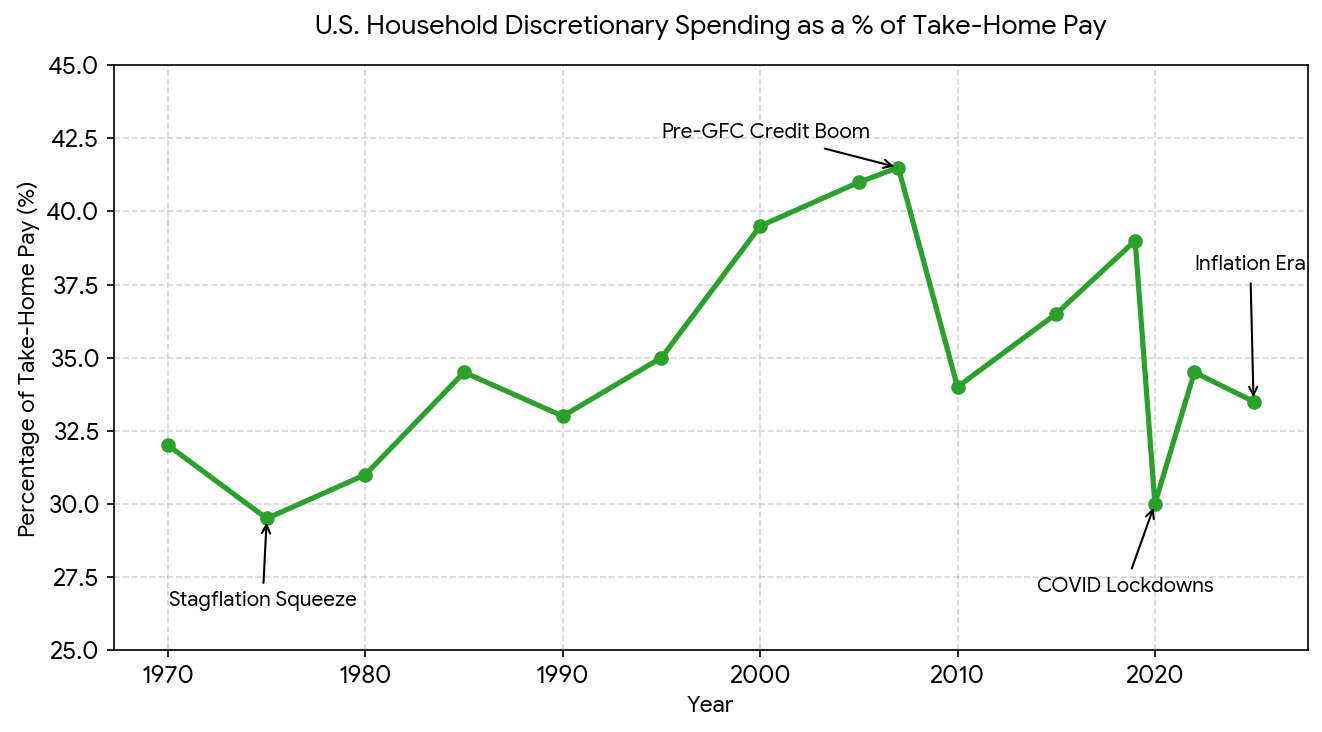
Gen Z would have been in prime “osmosis” territory between the ages of say 12 and 15 or from 2009 until 2024. Only one period, the COVID lockdowns, did US discretionary spending drop below the level of the early 1980s. They don’t understand the need to budget because they’ve never lived during a time when the majority of people had to do it.
How do we fix it?
For this generation? We can’t. They’ll slowly come to the realization that money is finite, and they will learn budgeting skills on their own, or they will be doomed to life-long debt.
However, we can help the next generation by demanding that schools make cooking and budgeting core courses in high school. One course, call it life skills, covering both would be sufficient.
If they cry “there’s not enough money,” they can slash genocide studies, ethnic studies, and the like. Students will just have to learn to get by without the real-world knowledge those courses are teaching them.
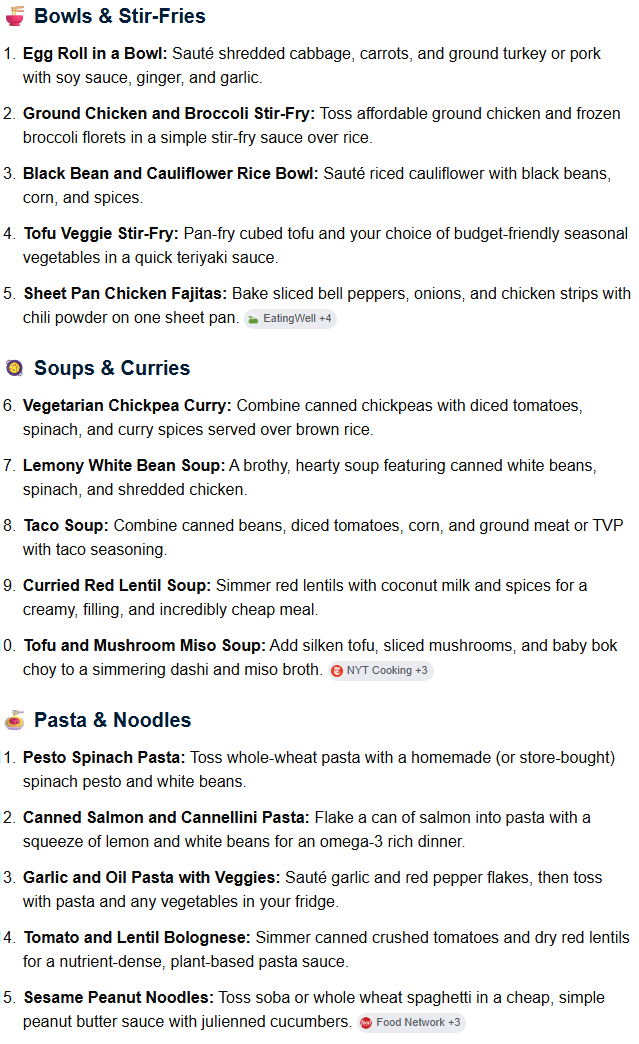
Note: for those interested here are fifteen recipes that are cheap, easy, and nutritious. If you don’t like them Google your own. Yes, you can use modern technology to learn new skills. Another thing we didn’t have when I was growing up.
About the Author
Phil is a freelance writer, Canadian Navy veteran, and classical liberal. He has lived and worked in both Canada and the United States and currently resides in Vancouver, British Columbia, where he writes on politics, individual rights, free speech, and whatever else catches his fancy.
📰 Hoist the Black Flag — politics, rights, and free speech
😄 Schrödinger’s Chicken — because sometimes you just need to laugh
If you enjoyed this piece, the single best thing you can do is hit the like button — it costs nothing and tells the algorithm this is worth sharing. After that, a restack puts it in front of readers who might never have found it otherwise. If you’d like to support the writing directly, subscribing or buying a coffee goes a long way. Either way, thank you for reading — it genuinely matters.
Wrong Speak is a free-expression platform that allows varying viewpoints. All views expressed in this article are the author’s own.

With a decent rice cooker and some 20-lb bags of rice, lentils and beans, you can have nutritious, protein-rich meals for about $1 a day; maybe $1.50 a day if you're an unusually big and/or physically active person—even if you're living in a transitional situation where you don't have a stove/hot plate/cook top. An outlay of $5 every few months in the spice aisle can add flavor and variety.
Add in a good multivitamin/mineral plus some extra stashes of quality supplements of vitamins D, C, and B12 (none of which can be meaningfully "overdosed"), and you've got yourself a nutritious, extremely protein-tich, diet that's loaded in all the necessary micronutrients. Still clocking in under $2 a day. Still if you don't even have a stove or a hot plate.
"However, we can help the next generation by demanding that schools make cooking and budgeting core courses in high school. One course, call it life skills, covering both would be sufficient." Meh... My daughter's high school had a mandatory personal finance class (as do all schools in our state) - she learned nothing. (Ditto for her classmates who took a cooking class). However, she quickly learned to budget and cook when she found herself on a very lean budget in college. With all the recipes on the internet, learning to cook is easier than ever now. Most of her friends in college manage to cook for themselves. It's fun, they exchange recipes and invite one another over to try them. It's nice when your parents and grandparents teach you when you are little and pass on some cool family recipes, but really, basic, healthy, budget cooking is not that complicated.