


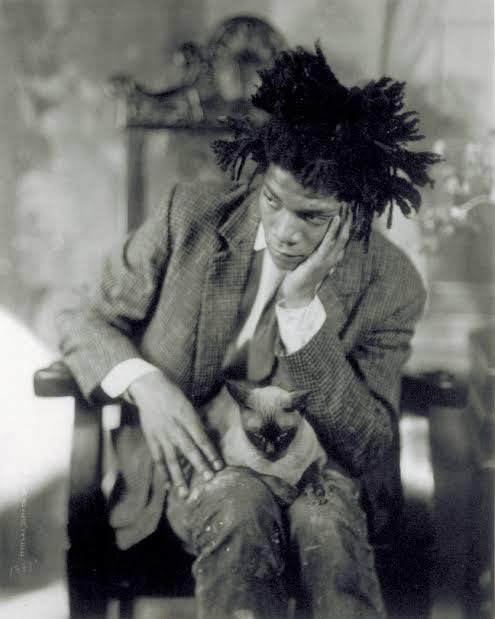
Note: These cats really piss me off, and I aim to write about it publicly.
With the proliferation and widespread use of Artificial Intelligence, among an ever-widening spectrum of potential applications, it is harder and harder to tell what is real and what is artificial –and this observation has long been old news. I fear the question will devolve from “what is real and what is not” to “does it even matter anymore?”
The shamelessness with which AI-generated commercials and content are now published must indicate something–it doesn’t matter what is artificial or not. At some point, we will get used to it and may even look back on those ol’ days where we, in our less evolved ways, still used live humans to record on camera–in the same tone of voice that is used when mentioning the horse and buggy.
What does this have to do with copycat artists? Can’t exactly say at the moment, but my guess it is downstream from the world really not giving much of a shit about reality.
These artists that I am referring to are so shameless in their regurgitation, so obvious in their mission, so transparent in their copying ways—it is a talent of a kind.
Don’t put all your eggs in one Basquait!
The artist currently undergoing this treatment the most is none other than Jean Michele Basquait; painter, graffiti artist, token art school anti-hero and style guide for a new generation of artists.
For those who don’t know, his legend is similar to that of a Kurt Cobain or Amy Winehouse–contemporary legends, voices of their generation, shot out of a cannon, and also–perished too early. Jean Michele frequently competes with Warhol, Van Gogh at auction to give a sense of scale. His work has entered into the public consciousness so deeply, you may have seen references of his work, without even knowing it.
(Yes, Basquiat paints as your five-year-old kid could; that’s the point—we heard you the first time. Grab a book, move on)
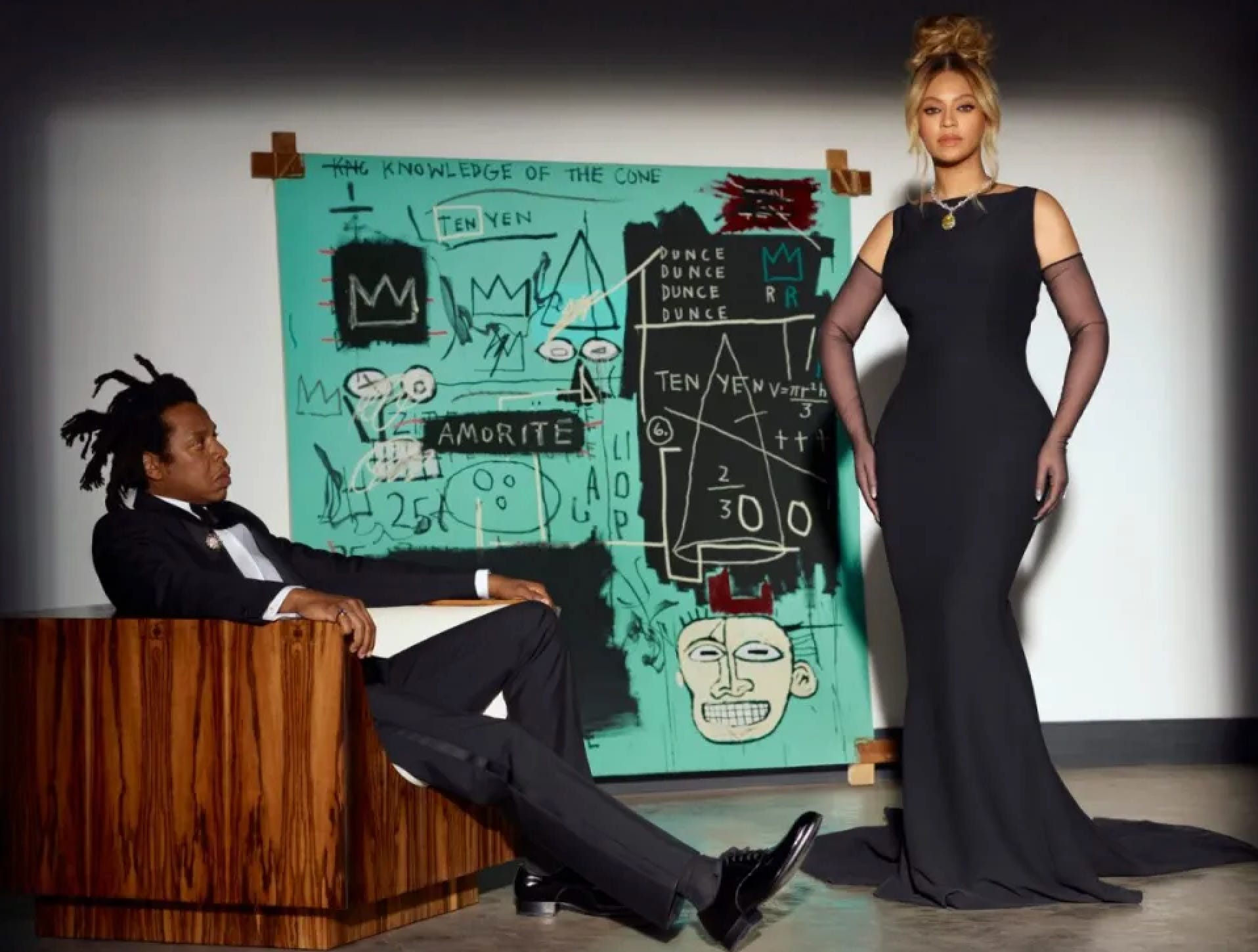
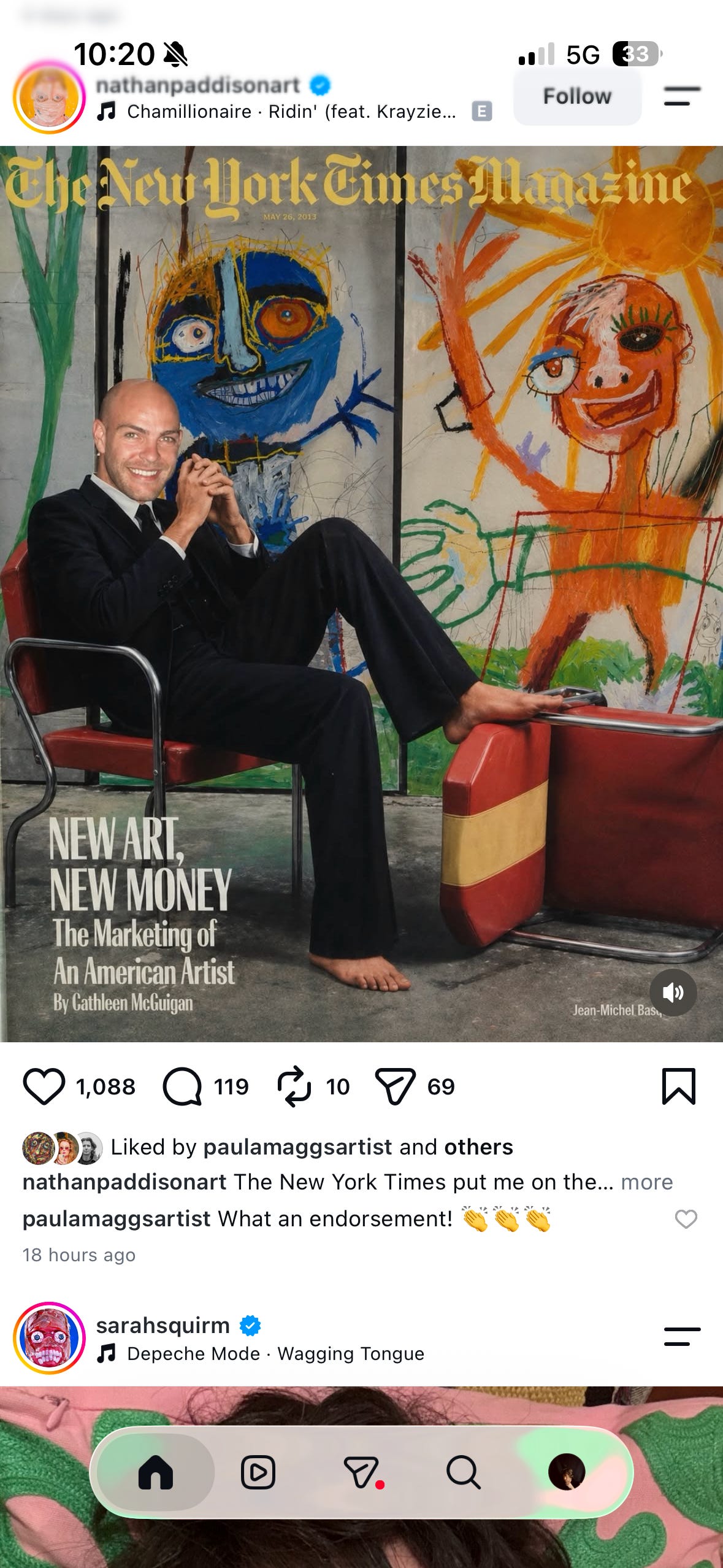
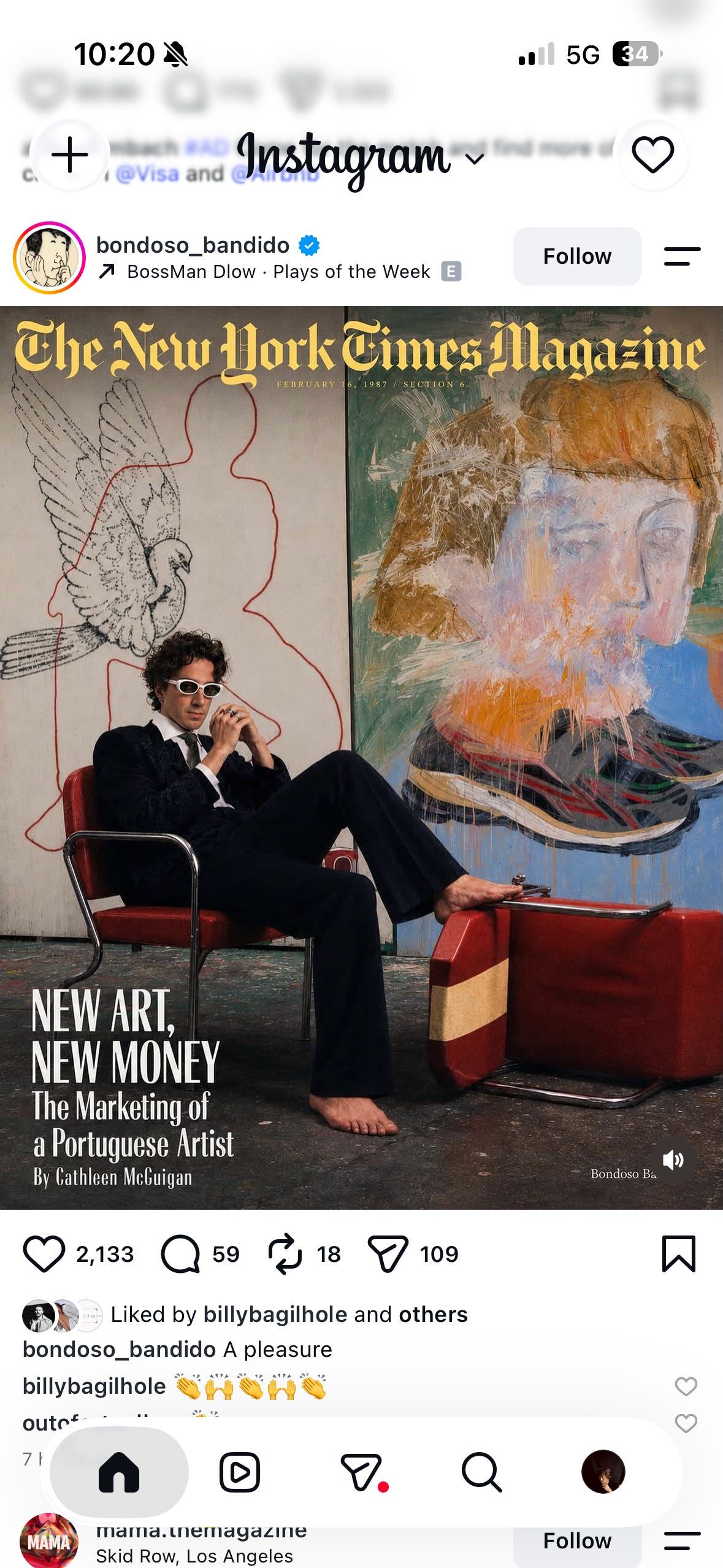
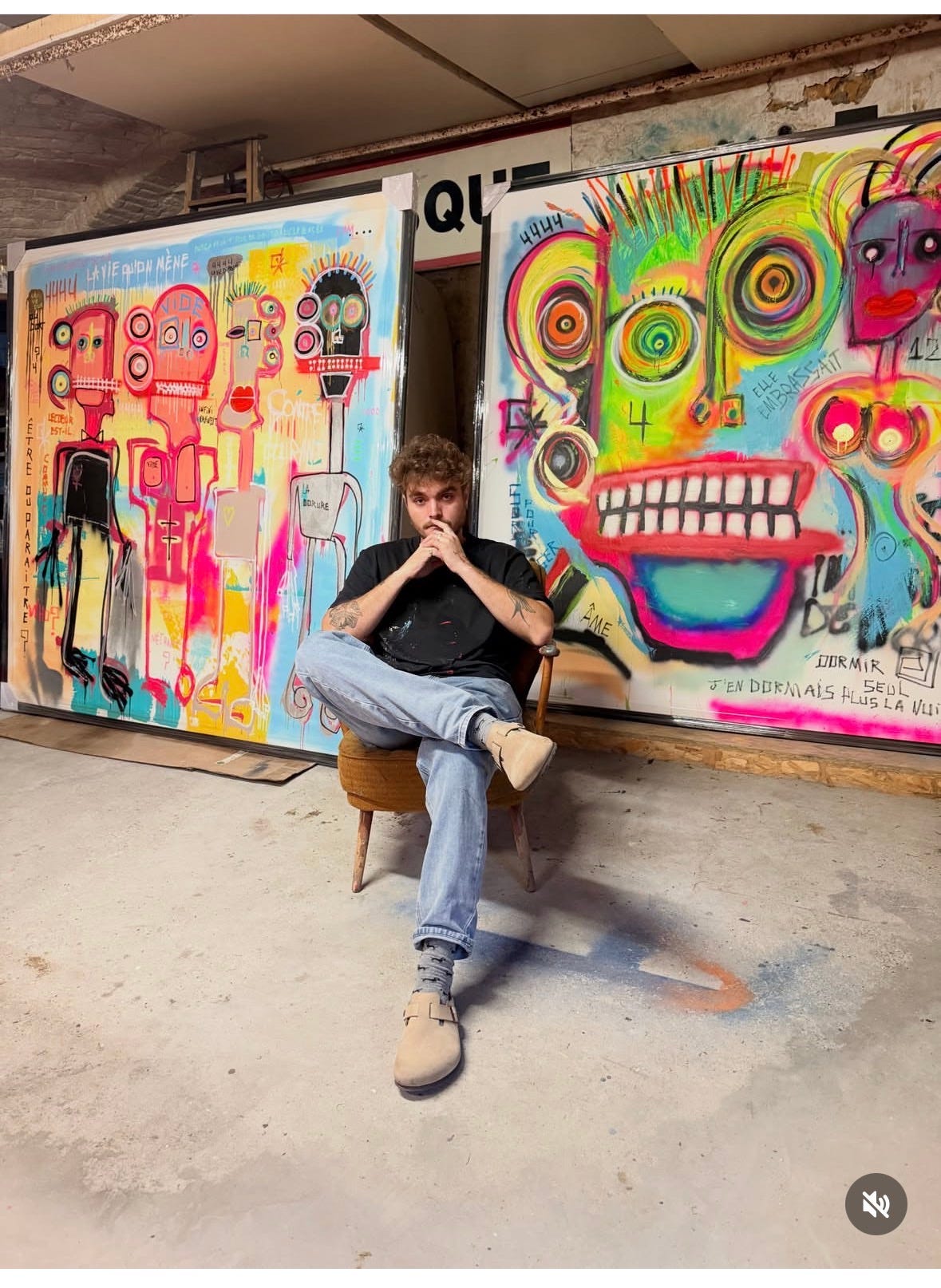
I don’t mind the cosplay or the homage play going on here–dressing up as cultural icons is a national pastime. I don’t even mind the copycat nature of self-exploration through influence–mimicking.
Processing the work of others is perfectly natural and expected throughout the course of an artist’s life, necessary even. I have done so much mimicking as an artist; I couldn’t possibly toss a brick in that glass house–but what is it that irks me about these artists? The recognition? The sales?
(CLARIFICATION: Jay-Z’s fascination with Basquiat is slightly adjacent to the phonies simply copying his paintings)
Is it the idea that, possibly, so few realize what they are doing, the origins of their work, that they take it as original? What then, does that say about the so-called artists of Instagram or the public they are so eager to appeal to? Have they lost all sense of decency?
When you paint in the style of another painter, you may be paying them a debt; you may flatter them. When you make a career off the back of their work by ripping it off it, you are dancing on their grave.
To get another sense of what I mean, the artist Mark Rothko (1903-1970) has also received his fair share of flattery:
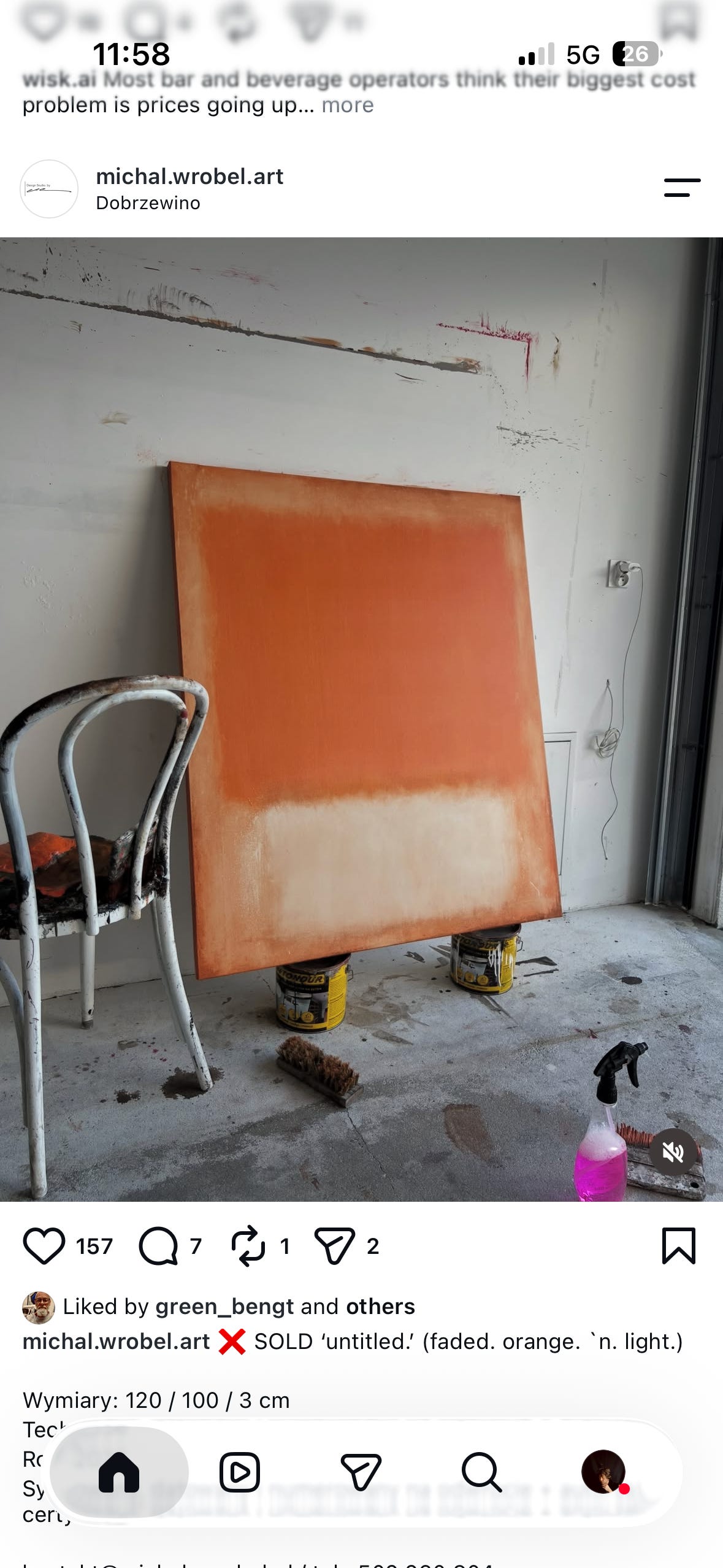
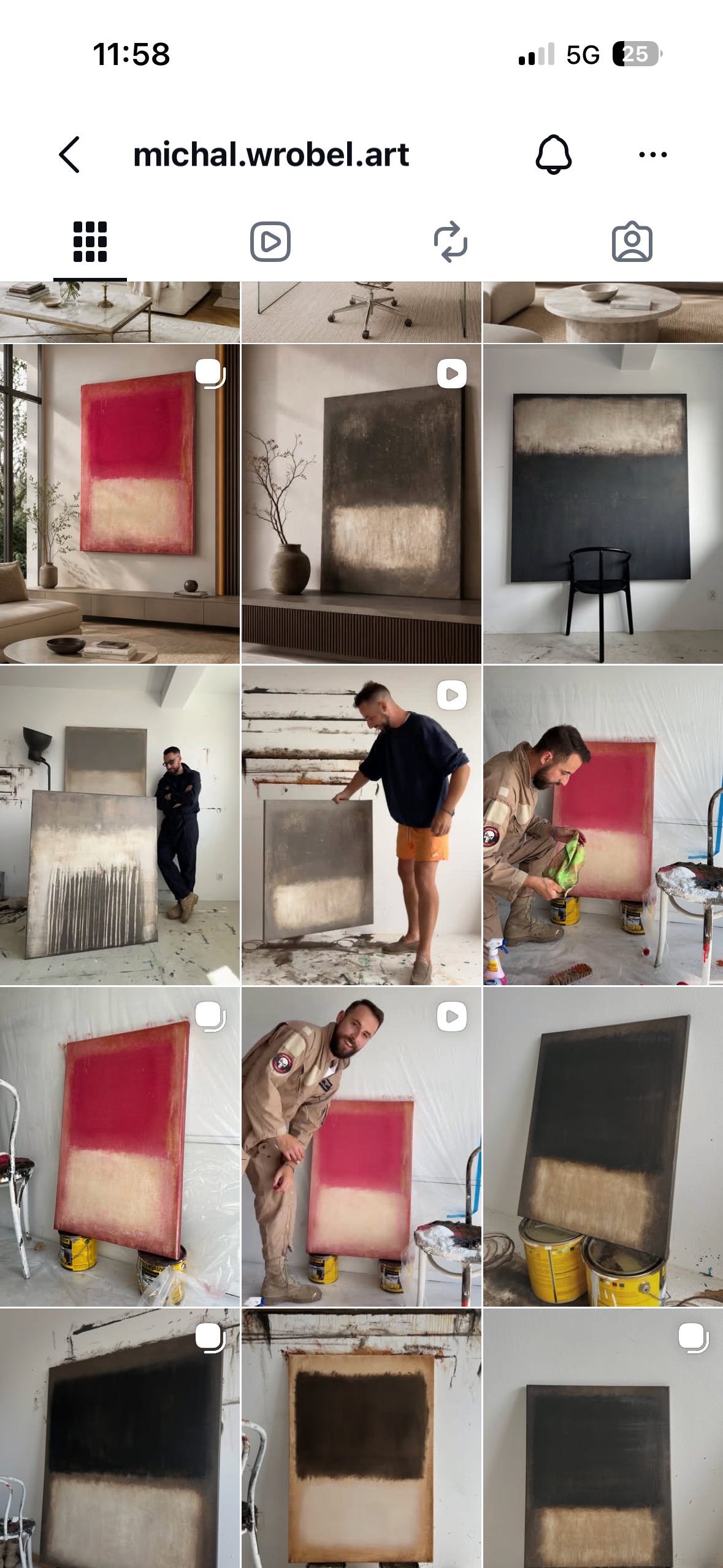
The real Mark Rothko and his extraordinary painting behind him:
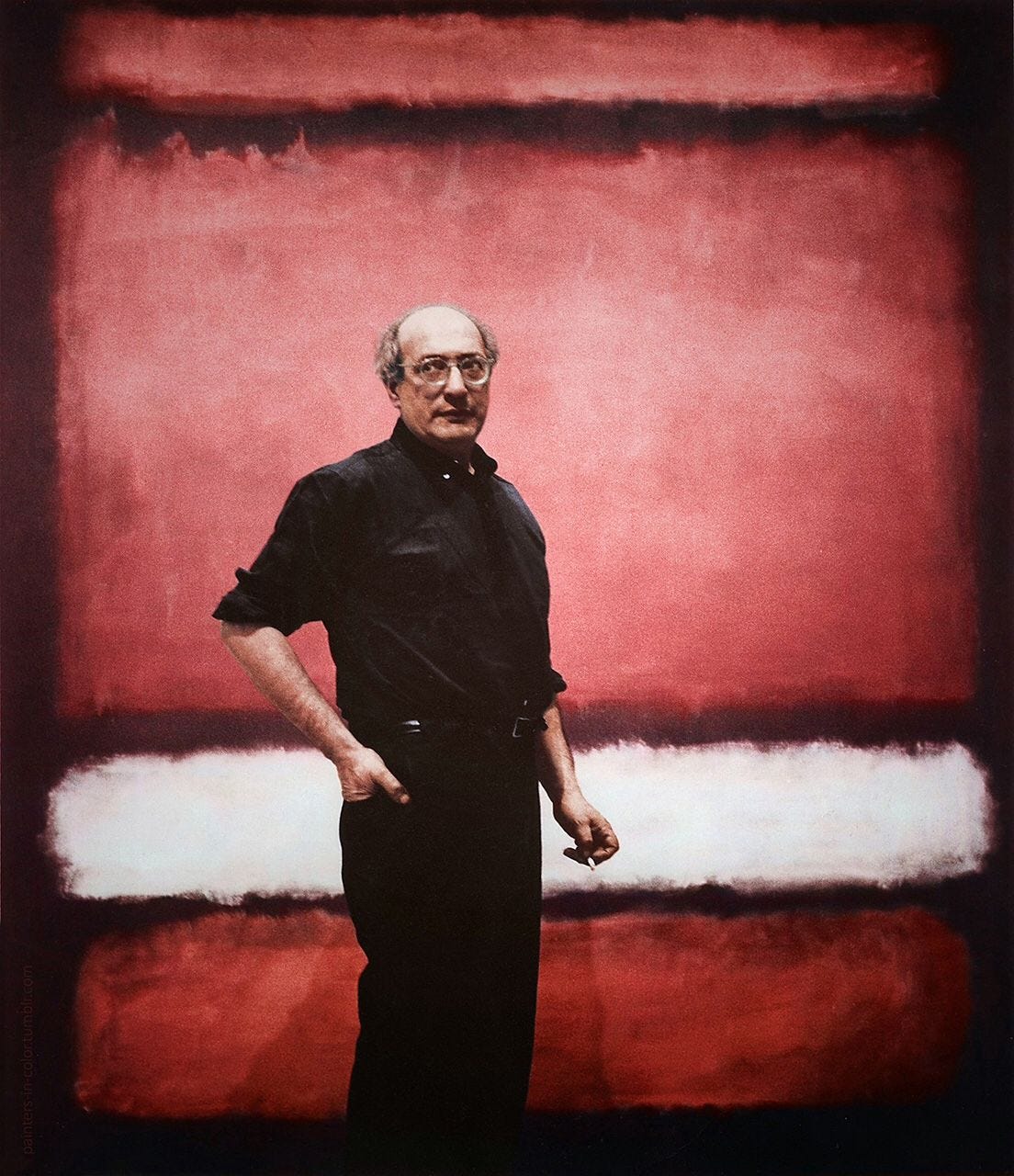
In a perfect world, these scam artists would either be sat down and explained some things to, or run right out of town. But we are far from a perfect world, and I don’t know that I would be able to stand to live in a world that was. (You can polish every corner of Paris, but, for heaven’s sake, leave one dirty toilet, for posterity, for the rest of us!)
What it might say, my takeaway as an artist, it must go something like this, the best I can put it:
I should almost thank them–they confirm the limitations of art–the purchase originality has on its process. That the paint, the canvas, the style, the aesthetic–the physical manifestations of all this art we make- it’s all bologna. It is neither here nor there. The canvases, the paint, the museums and the guards are all as good as dead. What am I saying? Have you no reverence?!
What I mean is that you can take all these things and toss them where they belong–right in the bin. Because you can copy Rothko and dress up like Basquait, but you can’t take away the late nights Rothko spent in that Union Square loft, or the nights Basquait slept in the park.
The lives and the experiences of the artist are theirs and theirs alone–they cannot be channeled nor copied nor relived. They can be felt through the works, but the work, as we know, can be destroyed. It is the same as saying– we live moment to moment.
The paintings and the poems are the burnoff, the exemplars of a life lived, blood that was pumped–a heart that quarreled and wrestled with lovers and demons. The artist gets the moment of expression, and that is it. The painting and the poem are just the ash, as Mr. Cohen put it. We all have the ash–artist or not–if you have lived your own life, which is always a life well-lived. The rest is window dressing. The artworks–from the Mona Lisa to the Parthenon, from the Chrysler Building to Les Demoiselles d’Avignon–it’s all, when it comes down to it, simply decoration.
Still, these little assholes rub me precisely the wrong way. However, they are, neither here nor there.
Judson Vereen
Oct 28, Portland, Oregon
Wrong Speak is a free-expression platform that allows varying viewpoints. All views expressed in this article are the author’s own.