


In case you hadn’t noticed, antisemitism is on the rise in the United States. This trend is a disturbing reminder of Nazi Germany, which was responsible for the Holocaust.
Antisemitic trends in America are a relatively recent phenomenon.
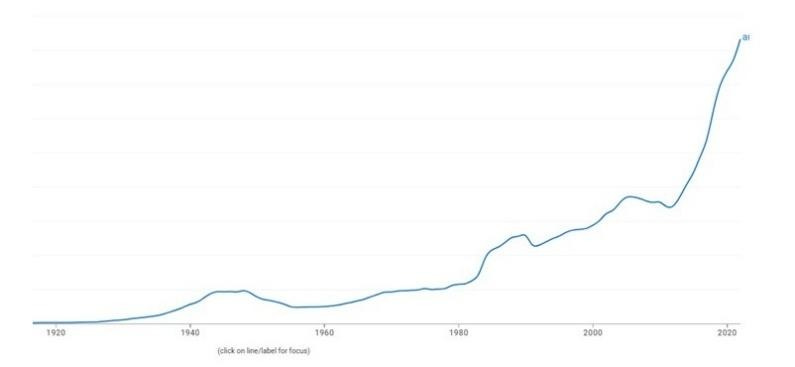
The chart above shows how the frequency of the word “antisemitism” has changed over time in the media, reflecting public interest. It provides a helpful measure of how much attention this topic has received over the last 20 years.
Antisemitism in America has multiple causes, reflecting the diversity of cultural and social views in our country. Researchers, Jewish organizations, political analysts, and law enforcement generally point to a mix of political polarization, social media dynamics, conspiracy thinking, spillover from international conflict, and broader social instability.

There are at least 8 different drivers acting in the United States.
1. Political polarization and extremism - On the far right, classic antisemitic ideas — Jewish control of finance, media, government, “globalism,” demographic replacement theories — have re-entered public discourse. Violent incidents like the Pittsburgh synagogue shooting and the Poway synagogue shooting were tied to white nationalist ideology.
On the far left, intense anti-Israel activism sometimes crosses into antisemitic tropes or collective blame directed at Jews broadly rather than criticism of the Israeli government specifically. Many Jewish groups distinguish legitimate criticism of Israel from rhetoric that demonizes Jews as a people.
2. Social media amplification - platforms reward outrage, emotional content, and conspiracy narratives. Algorithms rapidly spread conspiracy theories, historical distortions, Holocaust denial, “hidden elite” narratives, and emotionally charged political content.
3. Declining historical literacy - surveys show that many Americans — especially younger generations — know less about the Holocaust, Jewish history, and the historical consequences of antisemitic propaganda. This weakens social resistance to recycled stereotypes and misinformation.
4. Scapegoating during periods of instability - Historically, antisemitism has risen during periods of economic anxiety, cultural change, political distrust, and social fragmentation. Jews have often been cast as symbolic “insiders” or blamed for complex societal problems by both the left and the right. This pattern has recurred across centuries and political systems.
5. Spillover from the Middle East conflict - Tensions surrounding the Israeli-Palestinian conflict strongly affect antisemitism levels in the U.S. After major events such as the wars in Gaza, terrorist attacks, and military operations, reported antisemitic incidents often spike. Jewish institutions may become targets regardless of individuals’ political beliefs. Many American Jews report feeling pressured to answer collectively for the Israeli government’s actions.
6. Mainstreaming of conspiracy culture - General conspiracy thinking has grown in American culture, marked by distrust of institutions, anti-elite narratives, secret cabals, and “deep state” thinking. Antisemitism has historically adapted easily to conspiracy culture because Jews are often cast as the alleged hidden force behind events.
7. Normalization through public discourse - Ideas once considered socially unacceptable now appear more openly in online commentary, protests, fringe media, and occasionally mainstream politics. Repeated exposure can desensitize people to antisemitic language or symbols.
8. Identity politics and tribalism - Modern politics increasingly organizes people into competing identity groups. In highly polarized environments, minorities can become symbolic stand-ins for larger ideological battles. Jews occupy a complicated position because they are seen differently across racial, religious, economic, and political frameworks.
Antisemitism existed in Germany before the Nazis, and was expressed through conspiracy theories, nationalist resentment, and claims that Jews caused Germany’s defeat in World War I. The Nazis did not invent these ideas. They unified them into a total ideology tied to race, nationalism, and authoritarianism.
The Nazis were historically distinct because they moved beyond earlier persecutions by other groups, which often included exclusion, forced conversion, segregation, or expulsion, to total racial categorization, continent-wide persecution, mechanized mass murder, and the deliberate elimination of every Jew they could reach.
Let’s take a minute and look at the similarities and differences between America today and Nazi Germany in the 1930s. The similarities include conspiracy thinking, portraying Jews as outsiders, economic and social anxiety fueling scapegoating, and ideology spread through mass communication.
The differences are substantial, however, and include the following.
1. The U.S. government does not have an inherently antisemitic structure. Currently, antisemitism is not recognized as the official government stance. Jewish individuals have complete legal protections, antisemitic acts are prosecuted, and Jewish Americans are actively involved in politics, academia, business, media, and civic spheres.
2. American society is far more pluralistic, with strong traditions of religious freedom, constitutional protections, independent courts, diverse media, and civil society organizations. Organizations such as the Anti-Defamation League, the American Jewish Committee, universities, religious groups, and law enforcement openly monitor and combat antisemitism.
3. Antisemitism in America is fragmented, not centralized. In America today, antisemitism emerges from far-right white nationalism, some far-left anti-Zionist movements crossing into antisemitic rhetoric, extremist religious ideologies, and online conspiracy ecosystems.
4. Violence exists, but not industrialized persecution. The U.S. has experienced serious antisemitic attacks, including synagogue shootings, harassment, vandalism, and threats. This violence is not state-supported or state-driven.
You may recall my discussion of Hannah Arendt’s views in my last article. That article discussed her views on political equality. She also had strong opinions about antisemitism, which partly reflect her own experiences while avoiding capture by the Nazis.
Arendt labeled the Jews a “pariah” people, because of their dual characters: the parvenu or the assimilated Jew trying to enter elite society by downplaying Jewish identity, and the pariah, the outsider who accepts marginality and may develop moral or intellectual independence from it. She believed many talented Jewish intellectuals occupied a “conscious pariah” role.
Arendt believed the Jewish assimilation into modern society was incomplete and fragile. The emancipation in 19th-century Europe gave Jews legal rights but not genuine political security. They could become wealthy, cultured, and professionally successful, while remaining socially vulnerable because acceptance depended on unstable social moods rather than durable political belonging. Jews believed that success meant safety, but they didn’t understand that safety was dependent on antisemitism being controlled.
According to Arendt, the collapse of the traditional nation-state created a catastrophe. She asserted that minorities without secure national protection become vulnerable when states fail to protect them. She argued that Jews exemplified this vulnerability most clearly because they were dispersed across Europe, lacked sovereign protection, and often depended on fragile legal arrangements. This made them symbolic targets during social crises.
Arendt coined the phrase “banality of evil” during the 1960 Eichmann trial in Israel. Eichmann was a high-ranking Nazi accused of murdering thousands. In his defense, he claimed he was simply doing what he was told. The banality of evil describes a person who acts as a bureaucratic administrator, uses shallow clichés, and obeys without weighing the consequences. She concludes that great evil can be committed by ordinary people who stop thinking critically about morality.
If the Iran war and the Gaza conflict can be resolved, the fever of antisemitism in the United States will subside. The left’s antisemitic behavior is tied to their oppressor-oppressed ideology, and that rage will be dampened if they believe oppression has subsided. On the extreme right, there is no hope for cooler heads, because racial persecution is built into their authoritarian ideology.
The Jewish people are victims of their uniqueness, which is a constant excuse for targeting them.
Wrong Speak is a free-expression platform that allows varying viewpoints. All views expressed in this article are the author’s own.

In your point #5, you left out the fact that antisemites spilled out on campuses and streets before Israel responded to the slaughter. To say "antisemitism emerges from far-right white nationalism" and select 2 examples of violent incidents as the threat we're seeing is to have one's head buried in the sand. Those 2 examples were lone wingnuts, which we will always have from all sides, but the volcano of Jew-hate is organized and spewing from the left.
I am alarmed at the anti-semitism in the US, which comes from both the left and right, with an awful Venn diagram intersection. The NYC mayor pounds the table about Gaza with no mention of Sudan, Nigeria, or elsewhere where slaughter/kidnapping/enslavement occur. And when I hear the stolen land, I always ask the person if they are willing to give up the land we took? That said, I do have issues with Jewish intellectuals. Because they felt so 'othered,' they have provided destructive rhetoric. Critical legal theory comes from the Frankfurt School. Repressive Tolerance was written by Marcuse. Both have proved cancerous. While in a Czech Republic bookstore, there was only one book in English. It was about the genocide against the Gypsies. It was brutal. We don't hear about what happened to them. We don't hear what happened under Mao or Pol Pot. I greatly admire that the Jewish bloodline/culture continues but that is a double edged sword. They did so by othering themselves. Everyone else melts into their conquerors. People disappear. I read that the people who created Stonehenge were not the same people conquered by the Romans.